

Stacking STEELS Learning: When Students Start Feeling Like Scientists
March 11, 2026
Designing the Future: Warwick Students Compete on a National Stage
April 22, 2026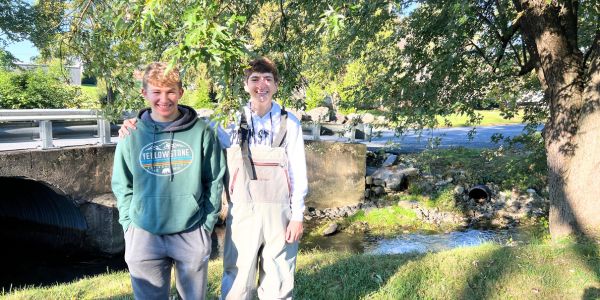
From Stream Banks to the Lab: How One Grant Powers Warwick Science
The LabQuest devices Warwick High School science teacher Doug Balmer received through an Ed Foundation grant back in 2020 have earned their keep.
These portable data-logging devices, compatible with dozens of science sensors, went everywhere: twelve stream studies, six fifth-grade Watershed Days, six STEAM Showcase events, and countless classroom labs. After six years of that kind of use, the rechargeable batteries started giving out, and last summer, a few of them didn’t go quietly. “Over the summer in the hot classrooms, the old batteries started to explode,” Balmer said. “Luckily, they didn’t damage any of the equipment.”
That’s the kind of detail that doesn’t show up in a grant application. But it’s also exactly why the Warwick Education Foundation’s “Going on a Lab Quest” renewal grant matters.
The new grant replaces those batteries, upgrades a few older units to the LabQuest 3 model, and adds two new interface hubs. Those hubs unlock something bigger than they sound.
Eurofins (Lancaster Laboratories) donated High Performance Liquid Chromatography instruments to the school. HPLC equipment costs anywhere from $15,000 to $30,000 per unit, and it’s one of the most-used instruments in professional chemistry labs. Eurofins has an entire floor dedicated to roughly 100 of them. With the new interface hubs from this grant, Warwick High School students can now connect and use those instruments right in their classrooms, getting hands-on experience with technology most students don’t see until college, if ever.
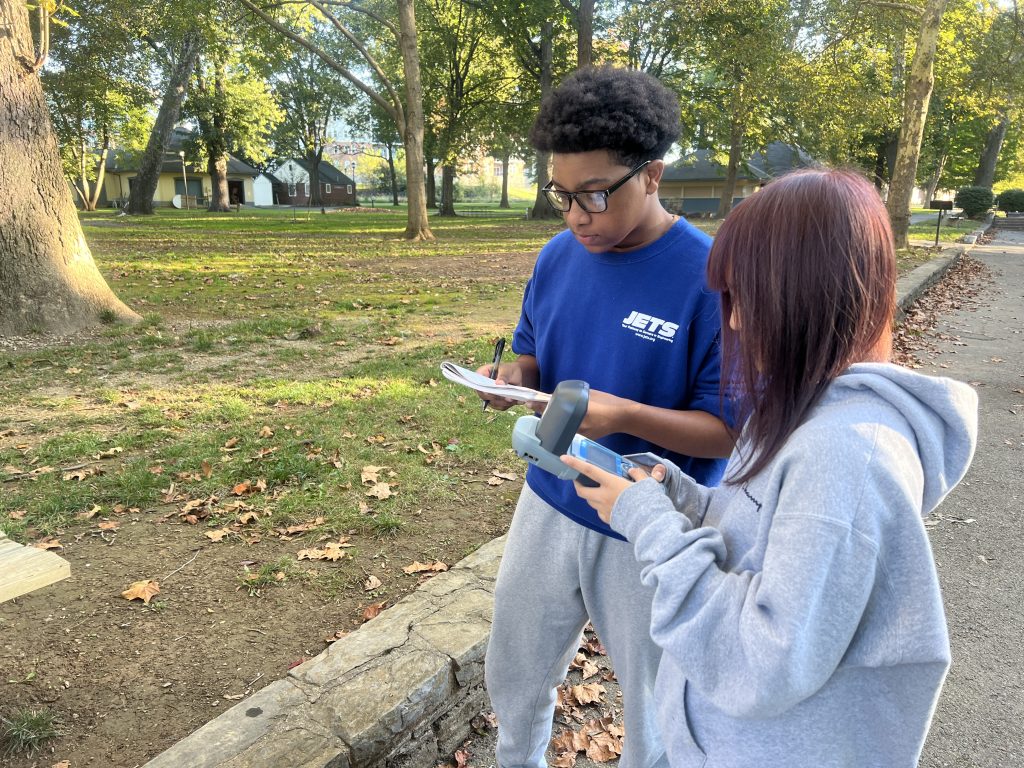 Even more, the LabQuest devices can be used beyond classroom walls. Students carry them out to local streams and Lititz Springs Park to test water quality and measure nitrates, phosphates, and turbidity.
“We often get asked what we are testing for when we are water sampling,” Balmer said. Neighbors stop to watch. Some are surprised by what a high school science program looks like up close.”
That reach extends to younger students, too. When fifth graders come out for Watershed Day, many are getting their first real look at field science equipment. The touch-screen interfaces let them collect their own data and report it back to the group. “I’m always amazed at how excited and enthusiastic the students are,” Balmer said.
And the curiosity doesn’t stop when the school day ends. One middle schooler checked out a LabQuest to measure water turbidity at home for a research project. A high schooler borrowed one to measure soil heat around simulated forest fires.
Warwick has built a real reputation in the Lancaster and Lebanon region for its science program. A student from Elizabethtown used Warwick’s equipment to gather data on her way to the International Science and Engineering Fair. At least one science teacher from another district moved to Lititz specifically so his children could go through this program.
None of that happens without the right equipment. Batteries that hold a charge. Interfaces that connect to the probes. Tools that show students what real science actually feels like.
Behind every stream study and every sensor reading is a donor who made it possible. The Warwick Education Foundation’s “Going on a Lab Quest” grant is proof that community investment in education is more than good intentions. It’s students in waders, standing at a streambank, doing real science.
To learn more about how the Warwick Education Foundation supports science education and other programs across the district, visit warwickef.org.
****