


From Stream Banks to the Lab: How One Grant Powers Warwick Science
April 8, 2026
A Field Trip Without the Bus: How the Mobile Ag Lab Brings Science to Life Across Warwick
April 22, 2026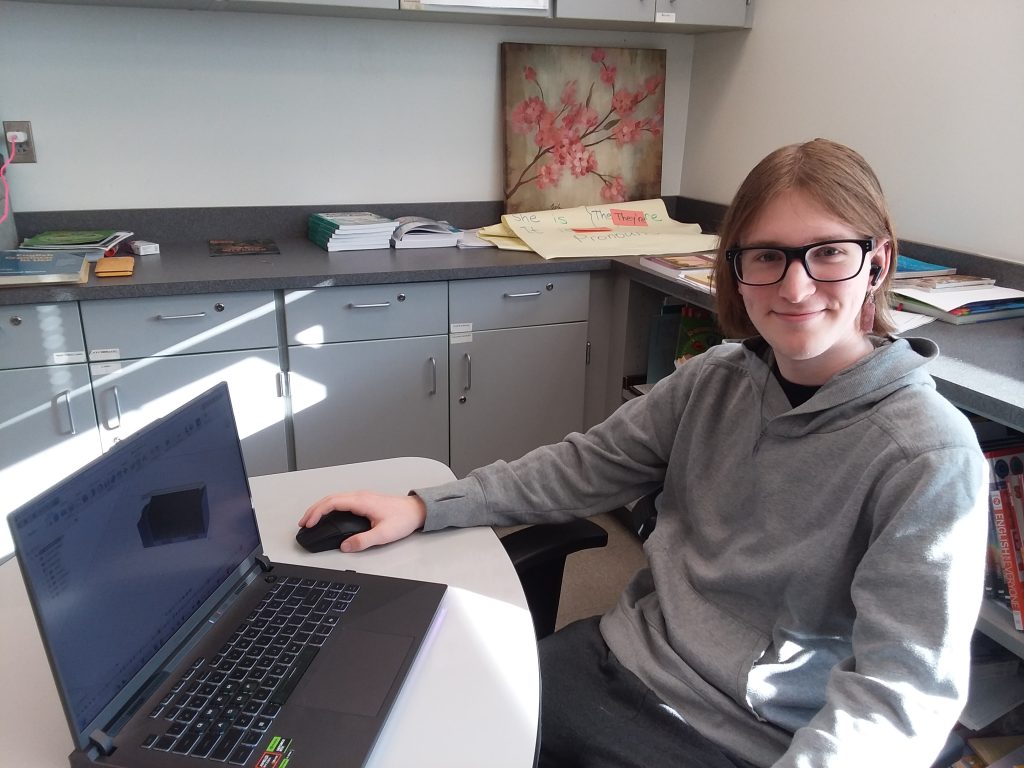
Designing the Future: Warwick Students Compete on a National Stage
For almost 20 years, Mike Smith has been teaching engineering and urban design at Warwick. Through the Future City competition, he’s watched students build model cities, present to judges, and go on to do remarkable things in the world. Some of these Warwick alumni have gone on to work as engineers at Apple, Google, Tesla, and the Department of Defense. Others have become West Point graduates, doctors, entrepreneurs, and CEOs.
“The oldest of these alumni are turning just 34 this year,” Mr. Smith said. “I can only dream of their greater impact over the next 20 years.”
For years, though, the Future City competition was only available to middle schoolers. When those students graduated to high school, the experience ended, and for many, that was a hard transition.
“Many of them were very sad when their Middle School experience was over,” Mr. Smith said. That didn’t stop them from staying connected. Warwick’s high school students kept showing up to mentor the younger kids. They still do.
Then the Future City competition expanded to include a high school division. And everything changed.
“My students were very excited when they learned that the Future City competition was expanding to include a high school competition,” Mr. Smith said.
There was just one problem: competing at the high school level requires Autodesk Revit, the industry-standard 3D design software used for official submission. Running Revit demands serious processing power, more than most classroom computers can handle.
That’s where the Warwick Education Foundation stepped in. The Laptops for Urban Design & Future City grant funded six new high-performance PCs capable of running Revit. With those machines in the classroom, Warwick’s high schoolers could finally compete.
“Without the funding to purchase these laptops, the competition could not have happened,” Mr. Smith said. “We now have the opportunity to put these powerful machines into the hands of these brilliant minds and see the amazing things they can do.”
In their first year of competition, the students designed a fully realized future city of Lisbon, Portugal, imagined 100 years from now. Their Lisbon 2126 was built around environmental sustainability, with vertical farms to maximize limited urban space, bio batteries powered by waste materials, and agricultural and infrastructural innovations designed for a changing climate.
They built every element from scratch in Revit, producing detailed 3D models and a fully rendered video walkthrough that guides judges through the city and the thinking behind it. [See the design in action]
Judges praised their “excellent ideas about vertical farms to save space and reduce impact on the environment, and using waste materials to power bio batteries,” and noted that “the work demonstrates a high level of research rigor, creativity, and clarity, reflecting an excellent understanding of sustainable urban design and circular food systems.”
Warwick placed 29th in the nation in their very first year at the high school level.
This would not have been possible without our generous donors who help fund Warwick Education Foundation grants like this one. With your support, Warwick students now have the tools to create (and compete for) what the future could look like.
Mr. Smith and his students are already looking ahead to next year.
Learn how you can support Warwick students here.
****