


Teaching Beyond the Textbook: How Ken Boland Turns Ideas Into Opportunity
August 13, 2026
Windows Open, Laughter In: How Physical Education Grants Keep Warwick Kids Moving
October 14, 2026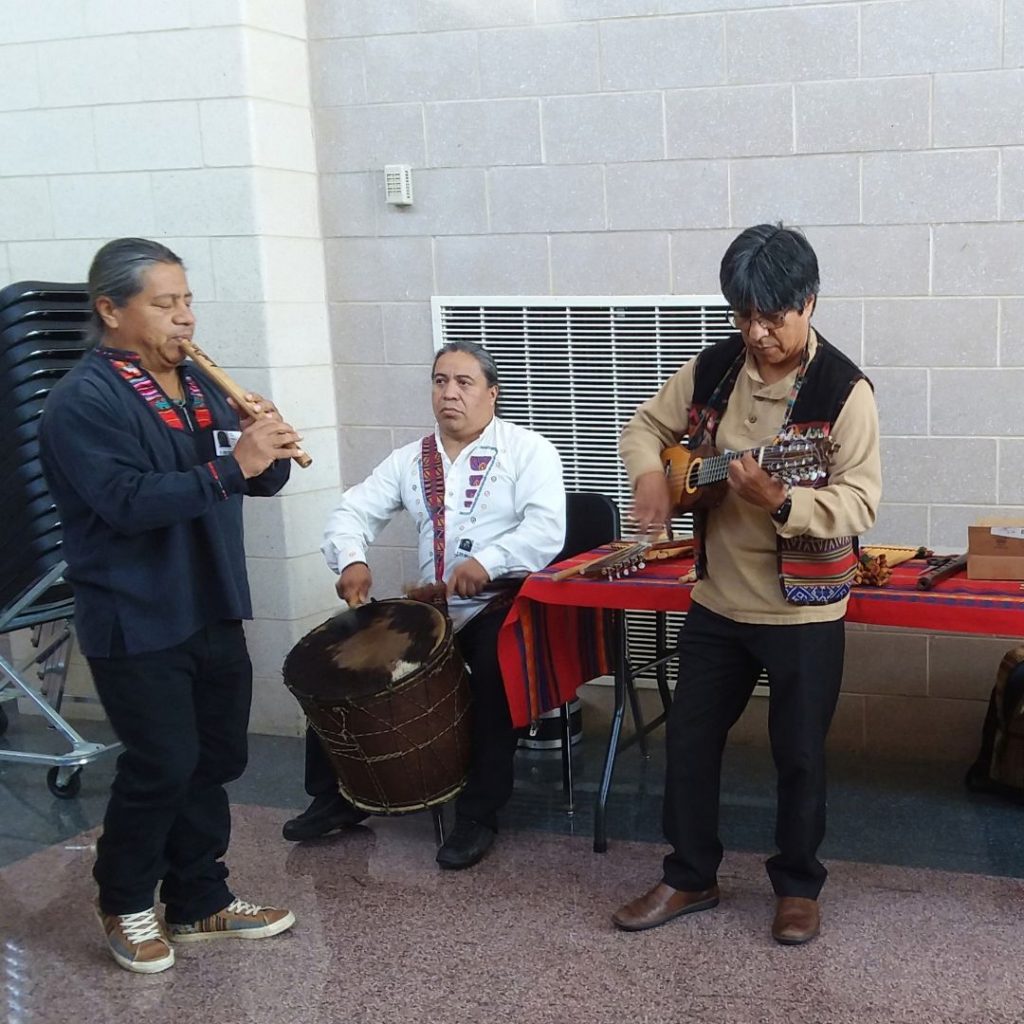
Every Student, Every Instrument: How the Ed Foundation Helps Keep Warwick’s Music Programs Growing
Walk into a Warwick music classroom on any given day, and you might find a second grader composing on a drum pad that turns color into sound, a third grader trying an adaptive recorder for the first time, or a hallway full of high schoolers watching a folk band from the Andes tune a twelve-string charango. None of it happens by accident. For more than a decade, the Warwick Education Foundation has funded music grants across every building in the district, and the pattern that emerges is simple: give teachers the tools, and they will find a way to reach every student.
A Foundation Built on Small Sparks
The earliest grants were modest and personal. In 2011 and 2012, ukuleles were brought into every elementary school, funded at $1,000 per building so an entire grade could learn together. From there, Lititz Elementary kept the momentum going year after year: Dalcroze Eurythmics lessons, a classroom set of xylophones, and iPads loaded with music-making apps so students could compose without ever touching a traditional instrument. These were the years that proved a small grant, spent well, could reshape what a music class looked like.
Instruments That Meet Students Where They Are
Some of the district’s most meaningful grants have gone toward removing barriers, not just adding equipment.
At Kissel Hill Elementary, music teacher Stephan Englehart introduced SpecDrums, a set of color-coded drum pads that let students associate musical pitches with colors before transitioning to letter names. “This is a great way for learners to work on early composition and note recognition,” Englehart wrote. “For the older students, it has been a great tool for composition.” The program started with two classroom sets and grew to three, now reaching 560 students a year.
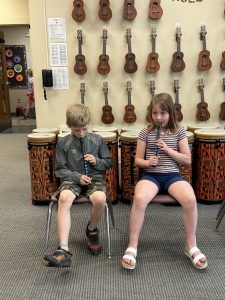
At John Beck, Bonfield, Kissel Hill, and Lititz Elementary, music teacher Michele Horton secured funding for adaptive NUVO recorders, designed with a silicone key system for students with physical challenges. What happened next surprised even her. “I had more NUVO recorders than students with needs this year,” Horton wrote. “Everyone wanted the ‘cool-looking’ recorder with keys. I had to have a raffle to determine who would get to borrow the recorder for the school year.” A tool built for a handful of students became the instrument every third grader wanted to play, and no student with a disability had to feel singled out.
 Growing Ensembles, Instrument by Instrument
Other grants have focused on giving students access to instruments they’d otherwise never get to try. Bass xylophones at Lititz Elementary deepened the K-6 general music program and gave students a fuller sound at the Chorus & Orff Concert. Commissioned pieces for elementary orchestra and band let more than 190 students perform music written specifically for Warwick, developed alongside composer Heather Hoefle.
Most recently, a $15,863 grant funded school-owned double basses for all four elementary buildings. Bass rentals are expensive enough to keep many families from even considering the instrument. Now, fourth graders across the district can pick up the bass on day one, no rental required, and the program grows a little more each year.
A Wider World of Music
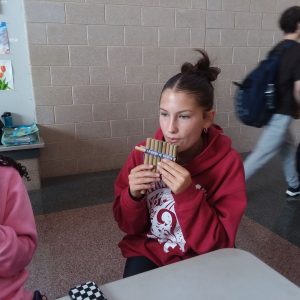
Not every grant buys an instrument. Spanish teacher Nikki Rivera’s grant brought Andes Manta, a folk ensemble from Ecuador, to perform for 400 to 500 Warwick students during Hispanic Heritage Month. Students watched charangos, panpipes, and hand drums come to life in the high school lobby. They even had the chance to make and play their own replica instruments in a special workshop afterward. “There are 21 Spanish-speaking countries, each with its own identity,” Rivera noted in her proposal, a reminder that music can teach culture as powerfully as any textbook.
 The Common Thread
From a $130 xylophone to a $15,000 bass program, these grants share the same goal: make sure every Warwick student has a way into music, however they learn best. As one educator’s grant renewal put it, the resources purchased “will be used for many years to come.” That’s the return donors are funding: not just an instrument, but years of students discovering they can make music.
“Every one of these grants started with a teacher who noticed a need and had the imagination to ask for it. That’s what this community makes possible.” — Barb Mobley, Executive Director, Warwick Education Foundation
Ready to help fund the next grant? Visit warwickef.org/support to give today.
****